El Niño is back. From oak woodlands to windswept islands, what does this mean for our feathered friends?
After a long, dry summer, the ancient blue oak in my mother’s North Bay backyard has dropped every last leaf. “Powdery mildew,” the arborist says, squinting up into the bare branches. “You’ll want to take it down before El Niño arrives, or it could come down on the house.”
It’s hard news to sit with. This is the tree that shaded my whole childhood. I soared under it on a long swing my dad rigged up when I was small. The tree has stood watch over that yard for longer than anyone in my family has been alive.
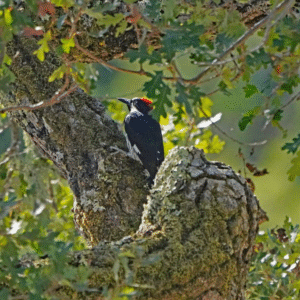
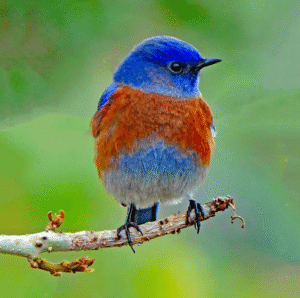
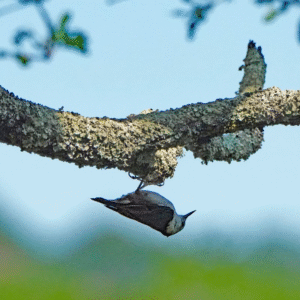
Oaks like it are mighty keystones: a single mature oak can host more than 300 species, over half of them birds. Last spring my mother flooded my phone with updates from her Merlin app, texting me every call she picked out in its canopy: Acorn Woodpeckers, White-Breasted Nuthatches, even Western Bluebirds—a sign of a healthy oak woodland ecosystem. Birdsong has poured out of that tree for maybe two hundred years. Soon, it may not.
The arborist wasn’t being dramatic: a stormy winter really is on its way, and by most accounts, this is shaping up to be no ordinary El Niño year.
If you’ve been anywhere near the news this summer, you’ve probably heard the superlatives being thrown around: super El Niño, Godzilla El Niño, possibly the strongest on record. As I stand under our old backyard oak and wonder if it’s strong enough to stay standing through this winter’s storms, it’s hard not to wonder what will happen to the birds that pass through those branches – and the birds that share our bigger backyard, from our oak savannas to our estuaries to our foggy outer islands.
According to a recent article from Bay Nature, forecasters now see a very high likelihood that this El Niño will be “very strong” by the end of the year, and a real chance it becomes the strongest since record-keeping began in 1950. It’s tempting to shrug this off given that the last “Godzilla” El Niño, in 2015–16, actually left the Bay Area with a drier-than-average winter. But climate scientist Daniel Swain, who writes the Weather West blog, has been actively pushing back on that complacency, arguing this event is set to meaningfully shape California’s weather for the next six to twelve months and that a lot of misleading information is circulating about what to expect.
For Bay Area weather specifically, the picture really is murkier than you’d think — this region sits in a zone where El Niño’s effects on rainfall are unpredictable, so a wetter winter is likely, but far from guaranteed. As Swain puts it, “we can’t generalize and say El Niño means X for California.” But what is nearly certain is a temporary bump in sea levels, bigger king tides, and warmer water. This should have Bay Area bird lovers paying close attention.
Seabirds and the science of El Niño
Inland where my mother’s oak tree grows, El Niño can heat things up, but at sea the climate pattern acts more like a disruptor: it upsets ocean circulation.
Every summer, strong winds drive a process called upwelling, pulling cold, nutrient-rich water up from the deep and fueling the small fish and krill that seabirds depend on. If you take a walk on one of our local coastal trails in Point Reyes National Seashore or the Marin Headlands, you can watch the bounty of life that this brings: Brown Pelicans rocketing into the water like torpedoes, Elegant Terns plunging on paper-airplane wings in search of sardines, colossal flocks of Sooty Shearwaters darkening the sky as they follow schools of fish in the rich, rising cold waters.
El Niño weakens that upwelling, scattering the fish that would normally be predictable, plentiful meals. Birds either have to travel farther to find food or go without, and this year that disruption is stacking on top of an ongoing marine heatwave that’s been cooking the California coast since May 2025. Scientists monitoring conditions say that heatwave is expected to keep intensifying through the end of the year, right as El Niño takes hold — meaning coastal wildlife may not get much of a break between the two.
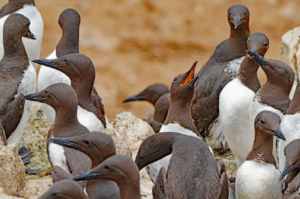
The early signs are already here. Marine ornithologist Tammy Russell told Bay Nature that brown pelicans, Brandt’s cormorants, and common murres have already begun turning up dead on West Coast beaches this year.
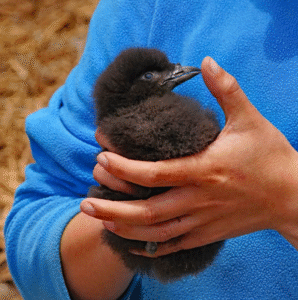
We’ve watched this happen before. During the 2015–16 “Godzilla” El Niño, thousands of emaciated Common Murres and Cassin’s Auklets washed ashore with skinny bodies and soggy, matted feathers. California Sea Lion pup strandings spiked to several times the historical average as nursing mothers were forced to forage farther and dive deeper for food, leaving pups on their own too long. Point Blue Conservation Science, the Bay Area nonprofit that has monitored the Farallon Islands’ seabird colonies since 1968, later tallied roughly 62,000 dead seabirds along California beaches from that event.
Even milder, more recent El Niño conditions have left a mark. During the 2023–24 El Niño, Farallones program biologist Amanda Spears observed some seabirds delaying breeding, skipping it altogether, or laying fewer eggs than usual — essentially hoarding their own energy reserves rather than gambling them on offspring in a lean year. Common Murres on Southeast Farallon Island have seen breeding success drop by as much as half to nearly 90 percent during past strong El Niño events.
(Interestingly for lovers of vagrants and rare birds, warm-water El Niños also tend to usher in southern visitors that don’t normally reach California — the 2015–16 event brought sightings of ocean sunfish, whale sharks, and tropical brown boobies to our coastline. We can watch for similar surprises this year!)
Storytelling through data
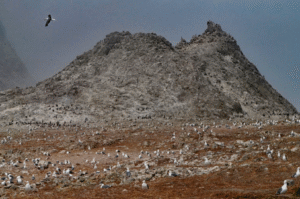
The Farallon Islands, 27 miles offshore from San Francisco, host the largest seabird breeding colony in the contiguous United States — more than half a million birds across 13 species, including half the world’s population of Ashy Storm-Petrels. Point Blue’s biologists have lived there year-round for over half a century, and that unbroken record is what allows scientists to say with confidence how past El Niño events have played out. That data has also driven important policy change, including the 1987 ban on the gillnetting that was drowning seabirds and 1993 legal protections for white sharks.
That long-term data is especially valuable as the next big El Niño approaches, but it’s in jeopardy: after federal funding was cut in 2023, Point Blue was slated to pull its team off the islands from September through March—the first gap in 56 years. Private donors bridged the gap for now, but federal money hasn’t returned, and the organization is fundraising to replace the roughly one-third of its $950,000 annual Farallones budget that the cuts erased. The funding crisis is arriving at the islands’ door at the same time as this super El Niño.
Woodland birds and a wet winter
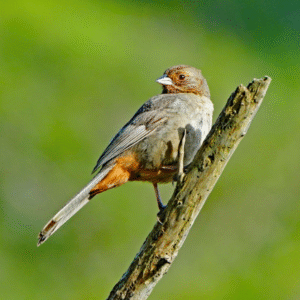
What does the approaching weather system mean for a backyard full of Acorn Woodpeckers and Oak Titmice, rather than a seabird colony? A long-term study tracking California’s oak woodland birds over 27 years found that most species (California Quail, California Scrub-Jay, Oak Titmouse, and others) actually responded positively to warm, wet El Niño winters, likely because the extra rain fuels the insects and seed crops they rely on to raise their young. El Niño rain can be a boon for landbirds, even as it starves the birds offshore of the cold-water fish they need.
Of course, the research behind it covers general El Niño winters, not a potential “historic” one layered on top of a multi-year megadrought and a warming climate baseline. It’s hard to say with confidence how this year’s climate system will impact California’s already stressed oak woodlands. And none of it changes the fate of an individual, already-ailing tree like my mother’s oak: a sudden wet winter can’t undo years of drought stress or a fungal infection already taking hold, and in some cases a wetter year can even accelerate the decline of a weakened tree by adding the weight of saturated soil and high winds to the equation. The birds that depend on oaks as a whole may do alright this winter. Any one oak’s fate is its own story.
What to watch for, and how to help
–Support Point Blue Conservation Science’s Farallones program, which is trying to replace the federal funding it lost and keep its streak of year-round seabird monitoring going.
-Report sick, injured, or dead seabirds and marine mammals to the Marine Mammal Center’s hotline at 415-289-7325, or through the California Department of Fish and Wildlife’s wildlife mortality reporting form. Don’t approach or touch them.
-Log what you see on iNaturalist, which researchers use to track shifts in species distribution during events like this.
-Photograph king tides for the California King Tides Project, which helps track coastal flooding as sea levels get an El Niño boost this winter.