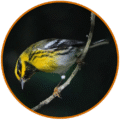
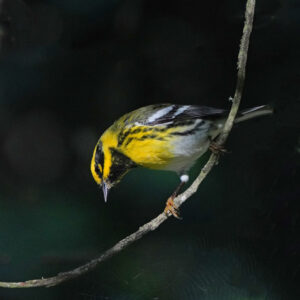
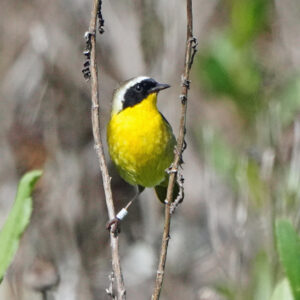
I am lying half-awake in the Berkeley dawn, with my windows open and the cool breath of the Bay washing through the neighborhood. A bright cascade of notes slides through my window, like a small orchestra beginning to tune itself. These are not the bird calls that I’ve been hearing all winter—the air is alive with newness. Kingbirds, warblers, flycatchers…In my half-dreaming state, I can almost imagine that I am waking up in some dripping Central American cloud forest, rippling with song. In fact, that’s where many of this morning’s visitors are arriving from!
Right now, something extraordinary is happening above the Bay Area — something that’s been happening for millennia but somehow still feels like a miracle each new year. The birds are moving.
Every spring, approximately one billion birds flow northward along the Pacific Flyway, one of the great migratory corridors of the Western Hemisphere. The California coast — and San Francisco Bay in particular — sits at a critical juncture on this route. Some birds are stopping here to rest and refuel. Others are arriving to breed, having wintered deep in Mexico and Central America. Still others are just passing through, riding the tailwinds of clear spring nights toward Alaska and the Arctic.
Most of this movement happens in darkness, which is part of why it feels so magical when the birds suddenly appear by morning, like they materialized from thin air. One evening your yard has a handful of regulars; the next morning it’s full of alluring new songs.
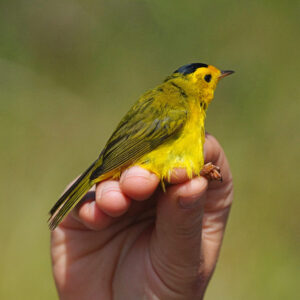
Late April is peak season for what birders call neotropical migrants — species that breed here or further north but winter in the tropics. The Wilson’s Warbler is usually among the first to announce itself: a tiny yellow-and-black dart of a bird, the male wearing his jet-black cap like a beret, his song a rapid, chattering volley. Soon after, the Swainson’s Thrush arrives, whose spiraling, flute-like song is one of the most beautiful sounds in North American birding: a series of ascending, breathy loops that seem to corkscrew up into the canopy and dissolve.
Both species have been making this journey for a very long time, and science is only now beginning to fully understand the astonishing precision of it.
Perched at the foggy edge of Bolinas Ridge, Point Blue Conservation Science’s Palomarin Field Station has been diligently unraveling the mysteries of migration for sixty years. The field station has maintained one of the longest continuous landbird studies west of the Mississippi — banding and releasing birds every season since 1966, building a dataset that few places on earth can match.
Each spring, the Palomarin team sets up delicate mist nets in the coastal scrub and riparian thickets, gently catching, measuring, and banding birds before releasing them. The data they collect has helped answer questions that once seemed unanswerable: Where exactly do these birds go when they leave? How do different populations differ in their journeys?
The Swainson’s Thrush, it turns out, is a fascinating case study. Point Blue’s research has revealed that the thrushes nesting near Palomarin winter primarily on the west coast of Mexico — a relatively short hop, as migrations go. But their cousins in the Sierra Nevada and Cascades make a far longer journey, into Central and South America, and experience far greater habitat loss along the way. This kind of insight — that neighboring populations can have dramatically different fates depending on their specific migratory routes — is exactly why long-term monitoring matters so much.
April, the Palomarin banders have observed, is a month of beautiful transition. The winter birds — Hermit Thrushes, Ruby-crowned Kinglets, Fox Sparrows — are quietly departing. In their place come the neotropical arrivals, and by late in the month, the Wilson’s Warblers and Swainson’s Thrushes are singing away in the coastal scrub, declaring territories, setting up for the summer ahead.
If you’ve never visited Palomarin, it’s worth knowing that the field station is open to visitors. Watching a bander carefully extract a warbler from a mist net, hold it in a practiced grip to read the measurements, then open their hand and watch it rocket into the brush, is a special thing to witness.
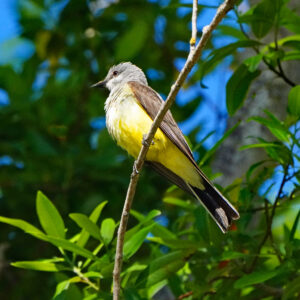
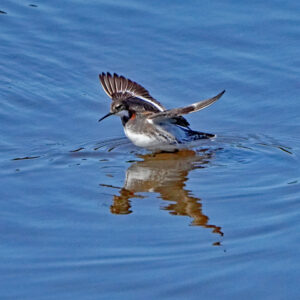
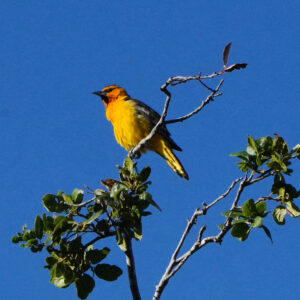
You don’t need to drive to Bolinas to feel the pulse of migration, though. The hour around dawn is when birds are most vocally active — singing to establish territories, locate mates, and announce their presence after a night of travel. Set an alarm for just before sunrise one morning this week and sit outside with a cup of coffee. You may be surprised how much is happening.
The tools available now are remarkable. Cornell Lab’s BirdCast publishes nightly migration forecasts that show, county by county, how many birds are expected to be aloft that night — the Bay Area regularly sees heavy migration traffic in late April and early May. And the Merlin Bird ID app, also from Cornell, can listen to the sounds around you and identify every species singing within earshot in real time. It’s a great tool for training your ear to recognize all the different species contributing to that ethereal dawn chorus!
Of course, to love birds is to be in relationship with them. How can we be good neighbors to the visitors passing through our neighborhoods right now? The birds that show up in our yards are often exhausted. They’ve been flying through the night, burning enormous amounts of energy, and they need food, water, and safe cover to rest and refuel before moving on. You can make a big difference for them by making your yard a friendly place.
Fresh water is probably the most immediately impactful thing you can offer; a shallow birdbath, cleaned and refilled every day or two, will attract an astonishing variety of species during migration. Native plants — toyon, coffeeberry, native oaks and willows if you have the space — provide insects and berries that many migrants depend on but can’t find in yards full of ornamentals. Keeping cats indoors during migration season matters enormously; outdoor cats are estimated to kill billions of birds in North America each year, and migrants who land exhausted in unfamiliar territory are especially vulnerable.
And, here’s one that surprises people: turning off unnecessary lights at night. Migrating birds navigate partly by stars and are disrupted by artificial light, which can cause them to circle lit buildings and windows until they’re too exhausted to continue. The “Lights Out” movement has been growing in cities along major flyways, and even a small change (closing the blinds, switching off exterior lights between midnight and dawn during peak migration weeks) can make a real difference.
Early this morning, as I write this, an Ash-Throated Flycatcher is warbling outside my window. Only during the dawn hour, the males sing an ephemeral, stuttering, burbling song to welcome the day. The BirdCast website tells me that 497,300 birds crossed through Alameda County last night under starry skies. The light in the early morning is still soft and golden, the air cool enough to make a walk feel like a gift. Step outside and see what you can hear, too!