Last week, sports fans were busy celebrating the Super Bowl – but Bay Area nature lovers know we’ve got something even better to celebrate: our own spectacular lineup of “superb owls.” And unlike the big game, owl season lasts all year long in Northern California.
Thanks to the dedicated work of organizations like Point Blue Conservation Science—which has been studying birds and ecosystems since 1965—we’re learning more than ever about these magnificent nocturnal neighbors and how to protect them.
Meet the Bay Area’s “Starting Lineup”
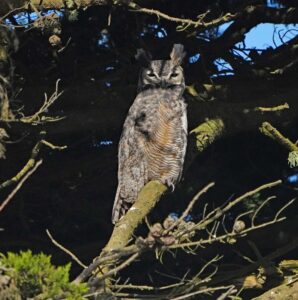
The Bay Area is home to an impressive roster of owl species, each with its own special talents. The most common players include the Great Horned Owl, with its distinctive feather “horns” and powerful hunting abilities; the ghostly white-faced Barn Owl, which can catch up to a dozen mice in a single night during breeding season; and the small but charismatic Western Screech-Owl, with its bouncing-ball call echoing through suburban backyards.
There’s also the Northern Spotted Owl, a federally threatened species that Point Blue has been monitoring in Marin County’s mature coniferous forests. As biologist Renée Cormier and her field team track recently fledged owls, they’re documenting the southern edge of this species’ range. For now, Marin County is one of the only places on the West Coast where Northern Spotted Owl populations aren’t plummeting, due in part to unique local geography that makes it hard for invasive Barred Owls to arrive and take over, as they’ve done across western forests. Vigilant local scientists are working to make sure the balance doesn’t tip.
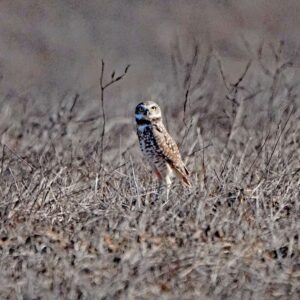
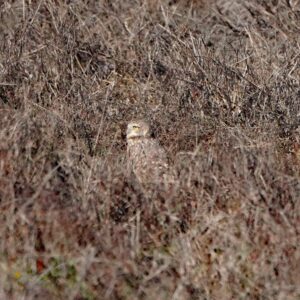
And then, there’s the Western Burrowing Owl, the only owl species active during the day, making it a favorite among birders, although they’re harder to spot these days: habitat loss throughout the Bay Area has driven steep population loss among these bright-eyed little birds. One place where they seem to be thriving is the Farallon Islands, and this is at the heart of an ongoing conservation dilemma: sometimes saving one imperiled species means making difficult choices about another.
Here’s the situation: Invasive house mice on Southeast Farallon Island have reached plague densities—up to 1,270 mice per acre, among the highest mouse populations recorded anywhere on Earth. These mice attract migrating Burrowing Owls each fall, and instead of continuing south to their natural wintering grounds, the owls stay to feast on the abundant rodents. But when winter rains flood mouse burrows and the rodent population crashes, the hungry owls switch prey—to Ashy Storm-Petrels. Point Blue is working toward resetting the balance—but with federal funding shortages, the future is uncertain.
What Makes Owls So Superb?
Owls are evolution’s masterpiece of predatory design. Their eyes are as large as ours, despite owls being much smaller (if our eyes were proportional to an owl’s, they’d be the size of oranges). Because their eyes are so large, there’s little room for eye muscles, so owls move their heads instead, rotating them up to 270 degrees.
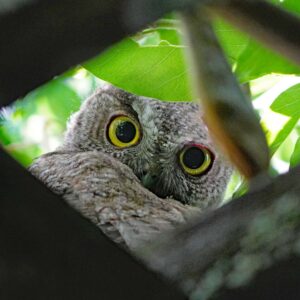
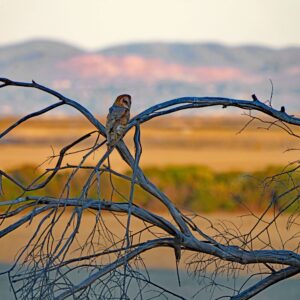
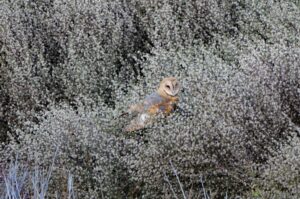
Their hunting prowess comes from specialized feathers with comb-like serrations and frayed edges that break up airflow, allowing them to fly in complete silence. Some species have asymmetrical ear openings positioned at different heights on their heads, giving them the ability to pinpoint prey by sound alone in total darkness.
How You Can Be Part of the “Team”
Point Blue’s long-running research—including the longest population study of land birds in North America west of the Mississippi River—shows that community engagement is crucial for conservation success. Here’s how you can support our superb owls:
Create habitat: Install a Barn Owl or Western Screech-Owl nest box in your yard. Organizations like WildCare offer boxes through programs like the Hungry Owls Project.
Skip the rat poison: Owls can eat poisoned rodents and die from secondary poisoning. Point Blue researchers emphasize this as a critical threat to local owl populations.
Support restoration projects: Point Blue’s STRAW (Students and Teachers Restoring A Watershed) Program has engaged over 60,000 students in habitat restoration work throughout the Bay Area, creating better habitat for owls and other wildlife.
Join monitoring efforts: Local conservation organizations offer volunteer opportunities—check out Point Blue’s current list of volunteer openings!
Speak up for protection: Support petitions and policies that protect owl habitat and list declining species like the Burrowing Owl.
The Real MVP: Long-Term Science
While the Super Bowl crowns a new champion every year, the real MVPs of owl conservation are the scientists and volunteers committed to decades-long research. Point Blue’s continuous presence on the Farallon Islands since 1969, their ongoing Spotted Owl monitoring in Marin, and their climate-smart conservation approaches are building the knowledge base we need to ensure these special raptors have a future in the Bay Area.
Now that the bustle of the Super Bowl has come and gone, take a moment to turn away from the screen and to step outside at dusk. Listen for the Great Horned Owl’s classic “hoo-ha-hoo, hoo-hoo” or the Barn Owl’s harsh screech. Next time you’re out walking, look for a Burrowing Owl bobbing its head near open grasslands (hint: they like to nest where ground squirrels have already dug burrows). Our superb owls are out there, playing the long game—and with our help, they’ll keep winning for generations to come.
Want to learn more about Point Blue Conservation Science’s owl research and other conservation work? Visit pointblue.org or check out their field station tours in Bolinas.