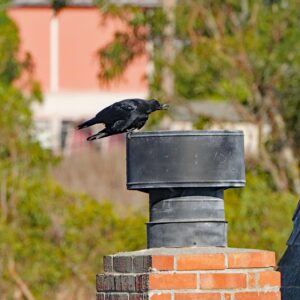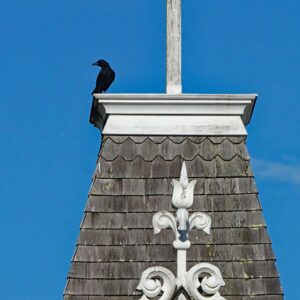
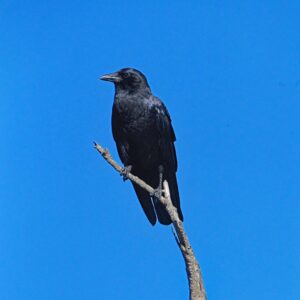
Earlier this winter, driving between Oakland and Berkeley, I happened to look up and discovered that the sky above me was thick with crows. For several long minutes, I continued north while the river of crows flowed southward—perhaps thousands of them streaming along the length of Martin Luther King Junior Way. Since then, I’ve been attuned to their movements—these black birds that travel overhead by the hundreds in my neighborhood, or fill the trees along Lake Merritt in the evenings, or wheel high above Golden Gate Park in thick flocks, outnumbering the hawks. All winter, I have felt like I’ve been caught in avian rush hour. Were there more crows in the Bay than usual, I wondered? And why were they all hanging out together?
Crows do, indeed, flock together in larger numbers in the winter months, I learned (a group of them is called a murder). Fall and winter are their seasons for companionship, for group safety, and for gossip—yes, they exchange info with each other at their gatherings!
Now, by March, the spectacle has begun to dissolve. The great winter roosts—some containing thousands of birds—are a seasonal phenomenon, and as days lengthen and temperatures begin to climb, the flocks break apart. Crows that spent the dark months in communal gangs pair off, grow territorial, and get down to the serious business of nesting. The reasons they flocked in the first place are precisely the reasons spring makes flocking unnecessary: in winter, a large roost offers safety in numbers—more eyes to spot predators, more bodies to confuse them — and functions as a kind of information network, where birds that found poor foraging during the day can follow more successful neighbors to better food sources the following morning. There is warmth in numbers, too, on cold January nights. But once breeding season arrives, that calculus shifts. A crow with a nest to defend and chicks to feed has no use for a thousand noisy roommates. The sky empties out, the trees go quiet, and the birds scatter into the neighborhoods.
But those thick flocks, those countless dark bodies filling the air? It’s not just our imagination that there seem to be more of them than usual. The crow population in the Bay Area has been on a steady increase since about 1975, and really exploded after 2000, according to a recent report from KQED. The numbers are striking: in Oakland, the annual Christmas Bird Count recorded 167 crows in 2000 and nearly 2,500 in 2018—an increase of roughly fifteen times in fewer than twenty years. In 2025, populations in San Francisco and Oakland both doubled from the previous year, with volunteers counting more than 3,000 crows in San Francisco alone.
What’s driving this boom? Cities, for a crow, are paradise. Food is abundant and distributed everywhere—spilled takeout, restaurant dumpsters, backyard compost bins. And the threats that have kept crow numbers in check in rural areas—hunting, poisoning, farmers defending their crops—are largely absent here. As Berkeley birder Bob Lewis has observed, crows have perhaps discovered that cities are a much safer place to be.
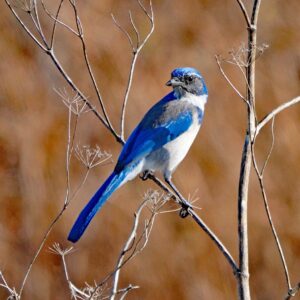
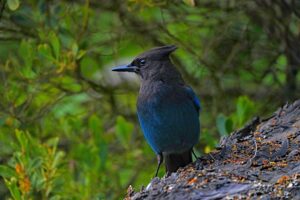
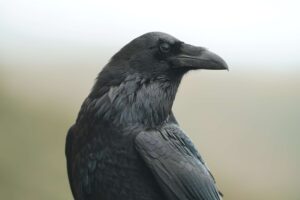
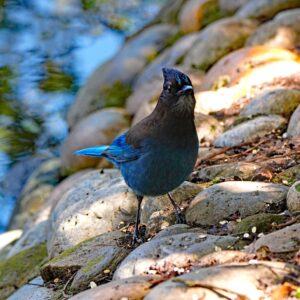
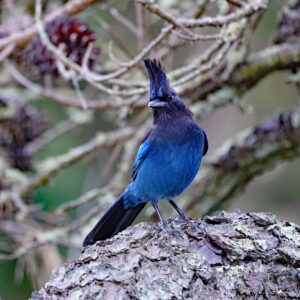
The American Crow (Corvus brachyrhynchos) is not the only corvid making itself at home in the region. Ravens, jays, and magpies are all members of the family Corvidae—a group whose Bay Area presence has been growing broadly for decades. Raven populations have also rebounded dramatically, with San Francisco going from 14 ravens in 1983 to 239 by 1999, and Oakland from just 5 to over 100. Walk through Point Reyes or the Oakland Hills and you’re likely to encounter Steller’s Jays and Scrub Jays, too—birds that share the crow’s characteristic intelligence and opportunism, if not its taste for urban life.
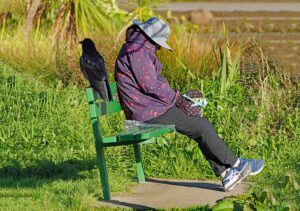
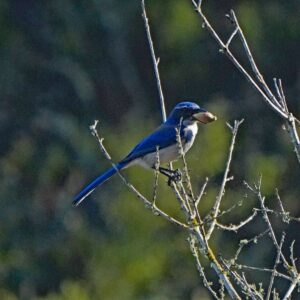
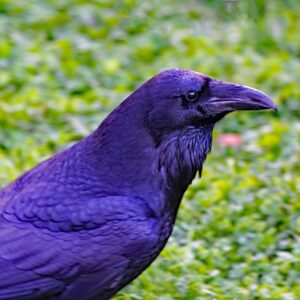
Corvids are widely regarded as among the most cognitively sophisticated birds on earth. Crows use tools, recognize individual human faces, hold grudges, and pass social knowledge between generations. They drop walnuts onto crosswalks and wait for cars to crack them open, then retrieve the pieces when the light turns red. Scrub Jays engage in what researchers call “episodic memory,” recalling not just where they hid food but when—and they even re-cache acorns in secret if they think a rival has watched them do it. The intelligence of this family of birds continues to surprise scientists.
Ecologically, corvids do far more than most city dwellers realize. They play critical roles as seed dispersers and scavengers, contributing to forest regeneration, nutrient cycling, and disease control. A single scrub-jay may cache tens of thousands of acorns in a season, and the ones it forgets become oak trees. As tree populations face mounting challenges from climate change and habitat fragmentation, this incessant seed-hoarding is likely to play an increasingly important role in facilitating forest dispersal and ecosystem recovery. Corvid behavior, it turns out, is woven into the fabric of our local ecosystems.
It’s hard not to be curious about these animals that have evolved alongside us, and that continue to share habitat with us and thrive in our presence, even as oak woodlands shrink and cities grow. We do know definitively that as much as we enjoy watching them, they’re watching us, too. What are they learning from us? And what, in turn, can we learn from them, as they flock and gather, watching and remembering, building complex communities alongside our own?