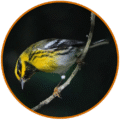


It is winter now in the Hamilton Wetlands, with enormous King Tides muscling deep into the marshes and ebbing again to reveal shining expanses of mudflats where Black-Necked Stilts parade on long legs and American Avocets probe the shallows with elegant upturned bills. A briny smell rises in the damp air, and pickleweed sprawls across the marsh in silvery-green carpets. It’s hard to imagine this thriving landscape was once an army airfield. Today, this 650-acre restoration site supports 100 bird species and offers a 2.5-mile stretch of Bay Trail where visitors can witness conservation in action.
This transformation is exactly the kind of success story celebrated in the newly launched SF Bay State of the Birds website, led by the San Francisco Bay Joint Venture and Point Blue Conservation Science. The dynamic online platform tracks bird population trends across San Francisco Bay’s four critical habitats, revealing which conservation strategies are working—and where more help is needed.
Point Blue brings six decades of expertise to this effort. The nonprofit organization maintains some of North America’s longest-running bird population studies, and their commitment to monitoring over years and decades provides the foundation for understanding how Bay Area ecosystems are responding to restoration investments. An earlier State of the Birds report came out in 2011—with this new launch, the team plans to update the report every three to five years, allowing scientists and land managers to adapt strategies as conditions change.
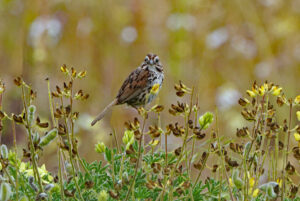
Julian Wood, Point Blue’s San Francisco Bay Program Leader who helped manage the project, has spent decades navigating tidal marshes during spring tides, counting Song Sparrow chirps and Common Yellowthroats’ calls. “Too often scientific work remains behind the scenes, so it’s exciting to bring these estuary bird trends and science-based restoration recommendation to a wider audience,” Wood said. “I want to help everyone celebrate what’s working and learn together how to protect species still at risk.”
The report reveals genuinely good news for tidal marsh birds. Three of four indicator species—Song Sparrows, Common Yellowthroats, and Black Rails—show populations that are stable or increasing since monitoring began. This success stems directly from habitat restoration funded by Measure AA, the voter-approved initiative that has restored over 7,800 acres of San Francisco Bay habitat since 2017. When science guides tax investments, the results can be transformative.
However, shorebirds tell a more sobering story. Since 2006, populations have declined dramatically—by 26 to 87 percent depending on species and location. These drops reflect challenges throughout the Pacific Flyway: that long “superhighway” for migratory birds that follows the west coast from Alaska to South America, bridging breeding and wintering habitats and funneling directly through the Bay Area. The good news? Recent years show signs that declines may be stabilizing or even reversing slightly in some areas. Management efforts are beginning to work.


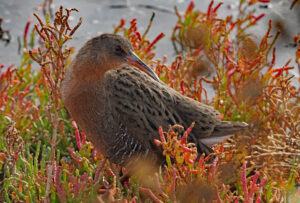
For Bay Area residents eager to experience these restored landscapes, you needn’t venture far. Hamilton Wetlands provides intimate access to watch threatened Western Snowy Plovers nest along the shoreline and—if you’re very lucky—to catch sight of the endangered Ridgway’s Rails skulking through the pickleweed.
The South Bay Salt Pond Restoration Project—one of the largest wetland restoration projects on the West Coast—offers miles of trails where visitors can observe wintering dabbling ducks like mallards and American Wigeons, whose populations have increased as managed ponds provide high-quality habitat.
The Sonoma Baylands and Sears Point restoration projects showcase adaptive management in action, where scientists monitor bird response to different restoration techniques.
When planning visits to restored wetlands, choosing designated trails and staying on pathways helps protect sensitive nesting and feeding areas. And, of course, there are many other ways to both appreciate and protect our avian neighbors. The website identifies more than 30 specific actions that communities can take to support bird populations into the future. For everyday residents, these include simple but impactful steps: keeping cats indoors or supervised outdoors, since feral and outdoor cats significantly impact bird populations; securing trash to reduce food sources that attract predators like raccoons and ravens; and minimizing disturbance in areas where shorebirds feed and roost by keeping dogs leashed and maintaining respectful distances from bird flocks.
Community members can also support the Pacific Flyway Shorebird Survey by volunteering to count shorebirds or facilitating land access for surveyors. Advocating for continued funding of habitat restoration and long-term monitoring programs ensures that scientists can track population trends and adapt management strategies as needed.
The bigger picture involves supporting policies that address climate change and sea level rise, which threaten to drown marshes faster than they can build up sediment. The report emphasizes the importance of connecting tidal marshes to uplands, allowing these habitats to migrate upslope as waters rise—a strategy that requires community support for preserving undeveloped lands adjacent to the bay.
The latest SF Bay State of the Birds report serves as both celebration of remarkable progress and roadmap for the work ahead—a shared tool for ensuring that San Francisco Bay remains a haven for birds, and the ecosystems they represent, for generations to come. As Wood and his colleagues continue their bird surveys, the data they collect will offer real-time insight into how (and how well) today’s conservation strategies are shaping and sheltering our shorelines.
Meanwhile, not too far from my own backyard in the East Bay, I go walking in Arrowhead Marsh in Oakland. Where the trail meets the water’s edge, a Ridgway’s Rail’s distinctive call, like two stones clicked together, rattles through the winter air—living evidence that patient restoration work can bring even the most elusive species home.